


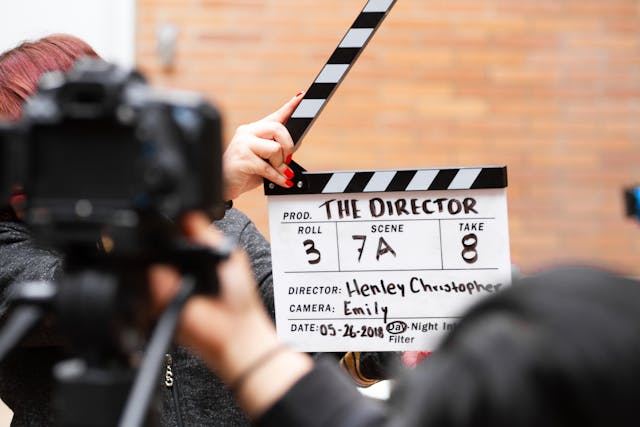
"Cinema was better before."
The phrase comes up often, almost as if it were self-evident. It pops up as people leave a theater, in the course of a discussion about streaming platforms, or when faced with the avalanche of franchises and remakes. But does this nostalgia say anything about cinema itself… or rather about our relationship with time and memories?
Cinema of yesteryear: the golden age… or the age of discovery
When we talk about the cinema of yesteryear, we immediately conjure up a gallery of masterpieces: Citizen Kane , The 400 Blows , Vertigo , La Dolce Vita . These films forged a language, established rules, and sometimes even invented forms. Today, they enjoy an almost sacred status, reinforced by time and collective memory.
But what we often forget is that these works coexisted with a vast number of forgotten, mediocre, or failed films. History has sifted through the past. What we call "cinema of the past" is actually the best of that era , filtered through decades of critical scrutiny.
This cinema wasn't necessarily purer or more daring in essence. It was above all new . Every formal invention was a surprise. Every break seemed radical because it hadn't yet been digested, analyzed, recycled.
Cinema today: too much or diversity?
Contemporary cinema is often accused of being formulaic, dominated by blockbusters and sprawling universes. It's true that major franchises occupy a central place in the collective imagination and on screens. They rely on spectacle and immersion, sometimes to the point of excess.
A film like Avatar: Of Fire and Ashes perfectly illustrates this tension: impressive visual ambition, a unique sensory experience, but also a narrative that can be divisive. Cinema today is thus often caught between the desire to push technical boundaries and the difficulty of renewing its storytelling.
However, reducing contemporary cinema to its blockbusters would be a mistake. Never before have so many films been produced, never before have so many different voices been able to emerge. Thanks to streaming, more fragile, more intimate, or more daring works are finding their audience, sometimes far beyond the boundaries once imposed by theatrical distribution.
Cinema today is not uniform: it is fragmented , splintered, multifaceted. It simply demands more curiosity from the viewer.
The cinema of tomorrow: a constant evolution
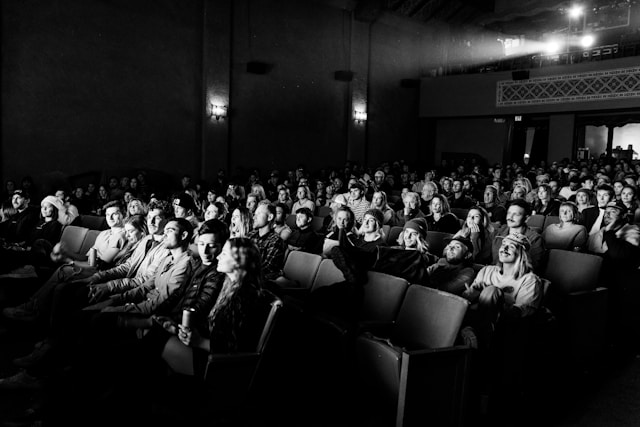
The cinema of tomorrow is as worrying as it is fascinating. Artificial intelligence, virtual reality, interactive experiences… Some see them as a threat to art, others as a natural extension of its language. But cinema has always evolved: from silent to sound, from black and white to color, from film to digital.
What will change are the tools. What will remain are the stories . Because despite all the technological revolutions, the fundamental need of cinema remains the same: to tell a story, to move people, to question. The medium doesn't matter, as long as the film manages to create a connection.
The future of cinema will probably be neither entirely in theaters nor exclusively streaming. It will be hybrid, adaptable, and fluid—just like the viewers themselves.
So, was cinema really better in the past?
The answer is probably the simplest: no, it was different .
Every era projects its anxieties, dreams, and contradictions onto the screen. Yesterday's cinema inspires us, today's shakes us up, and tomorrow's still eludes us.
Comparing eras often means forgetting that cinema is a living art. It moves forward, stumbles, sometimes repeats itself, but continues to transform. And as long as there are viewers to sit in the dark—in a theater or on a sofa—cinema will continue to exist, in new forms.
Perhaps cinema wasn't better before.
Perhaps it's simply always evolving into something else .
Hi, this is a comment.
To get started with moderating, editing, and deleting comments, please visit the Comments screen in the dashboard.
Comment avatars come from Gravatar .